
Home Care vs Nursing Home: Caregiver Support
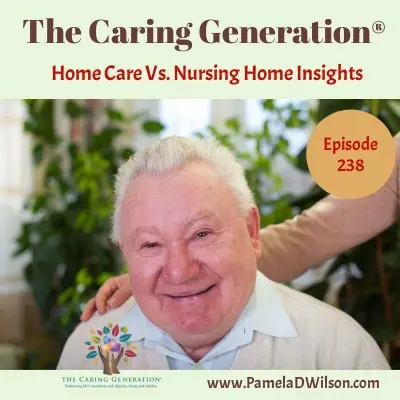
The Caring Generation®—Episode 238, February 11, 2026. The home care vs nursing home decision for an elderly parent or spouse can be emotionally distressing. Learn what care nursing home staff provides and why family caregiver support is beneficial to avoid unexpected or potentially harmful situations.
Caregiving expert Pamela D. Wilson shares expert advice and real-life experiences about home care and nursing home care to support family caregivers and older adults with dementia.
This is a multi-media article feature.
Scroll down to read the article, select links to listen to the podcast, or watch the video. The article has links in “pink type” to related topics about caregiving, health, well-being, and self-care.
Click the round yellow play button below to listen to this episode. To download the episode, click the down arrow button. You can also use the scroll bar below the photo at the right to check out prior episodes.
Do you have a care or caregiving question? Share your question with Pamela by completing the caregiver survey on her Contact Me page, where you can also schedule a 1:1 consultation.
Home Care vs Nursing Home
What are the differences between home care vs nursing home? While the differences may seem obvious, there is much more to this question than one might imagine.
Let’s look at three areas to be considered when comparing home care to nursing home care. 1) Home care by whom and the time involved. 2) The cost of home care vs nursing home. 3) The extent of care needed, which can impact whether an elderly parent or family member can receive home care or must move to a nursing home.
Home Care
The time committed to providing care in the home contributes to an elderly parent or family member’s ability to live in their home. These time commitments can vary significantly.
Home care may be 10, 40, or 168 hours per week, which translates to 24 hours a day, 7 days a week.
The caregiver may be a family member who lives in the home. Care may be provided by a combination of a family caregiver and an agency caregiver, or by agency caregivers only.
How might the physical and emotional demands of care, 10 or 40 hours a week, differ from care provided 168 hours a week?
The person providing 10 hours of care may have a full-time paying job. The 40-hour-a-week caregiver may also have a full-time job. Caregivers may fulfill their time commitments after their regular workday ends or on weekends. Many struggle to find a work-life balance.
Occasional Home Care Versus 24 Hour Care
In addition to their caregiving time commitments, both individuals probably have some level of freedom.
Maybe they attend school, have a family, raise children, spend time with their spouse, or socialize with friends, even though their free time may be limited.
On the other hand, the caregiver who is 24/7 – working 168 hours a week—may not get any real time off or time away from the home where care is provided.
 A twenty-four-hour caregiver can be a spouse, an adult child, or even a friend. If hired through a non-medical in-home care agency, the twenty-four-hour caregiver may work five eight-hour shifts and still have time for themselves.
The 24/7 168-hour-a-week caregiver may take a nap or catch an hour of quiet time here or there.
However, they may not be able to leave the house without backup care. A spouse or elderly parent with dementia may not be safe alone. A loved one with Parkinson’s disease may be at risk of falls.
Family caregivers may also have their own health issues or restrictions that make leaving the house difficult. Some caregivers who receive Medicaid benefits care for elderly parents who also receive Medicaid benefits.
Time Trade-Offs and Isolation
Being a full-time 24-hour caregiver can be physically and emotionally exhausting and isolating.
- What is the opportunity cost and long-term effect of trading life to be a caregiver?
- What is the value of living at home versus living in a nursing home?
Caregiver support, 168 hours a week, allows others to go on with their lives. Unless there are verbal or written contracts (written contracts are best) for income and paid time off, the caregiver can experience financial poverty, personal or social poverty, and health poverty.
Quality of life for a 24/7 caregiver is often diminished by giving up other sources of income, like a higher-paying job, to become a caregiver. Job skills, healthcare, and retirement benefits can be lost.
Women who are caregivers can experience significant negative financial impacts on their lives.
Depending on the time out of the workforce, the ability to re-employ at the same level, position, or income may not be possible. Reuniting with lost friends may be difficult. Health may decline as positive habits and routines are traded for time spent caregiving.
Retired family members who become caregivers trade their retirement dreams. The impact of 24-hour full-time caregiving differs from hourly or occasional care.
Why Home is Preferred
 Excluding an abusive or neglectful caregiving situation, the person receiving care benefits in many ways. These may include:
- Living in a comfortable and familiar home that the caregiver maintains
- Receiving 1:1 support and attention for activities of daily living (ADLSs and IADLs)
- Improved quality of life by receiving assistance with activities that can no longer be performed or managed
- Support with medical and health care coordination
- Assistance with daily tasks like opening mail, organizing bills, and making appointments.
How might your life change or improve if you had a personal assistant for 10, 40, or 168 hours a week?
The Downside of Home Care
The downside of home care vs nursing home is that the caregiver and person needing care may be confined to a limited space, like the home. The situation can be isolating when there are no visitors or opportunities to leave the house.
Not all caregiving tasks can be performed by everyone involved. Family caregivers can perform tasks that home care agency employees are not authorized to perform. When hiring home caregivers, it’s important to know what tasks they are permitted to perform.
For example, non-medical home care employees cannot administer medications, take them from bottles, or organize them. This task is considered a medical task. However, the caregiver can offer medication reminding as a service.
The Cost Range of Care at Home vs Nursing Home Care
The cost of home care versus nursing home care varies widely. Depending on what research, public policy opinion, or document you read, you may hear that nursing home care is less than having a caregiver in the home.
The cost of care depends on the amount of care time, the extent of care for non-medical or medical conditions, and the care of living quarters or a home.
In some cases, nursing home care can be less costly. For example, if an individual receives 10 hours of paid caregiving time each week at $25 to $40 per hour (in 2026), this statement is accurate.
Alternatively, a nursing home can be less expensive than 168 hours of full-time care over 52 weeks. The choice of where care is provided is determined by the individual who needs care, their financial resources, and the availability of reliable, trustworthy caregivers.
During my years in care management, I managed 24-hour care for many individuals in their homes who had planned ahead and had the financial resources to remain at home. The quality of life for these individuals was much better than it would have been in a nursing home.
So, what is the trade-off between home care and a nursing home for a person who needs ongoing medical or physical care that may not be appropriately or reasonably met at home?
Care Transitions
 As mentioned previously, the simple advantages of home care vs nursing homes are comfort, a flexible routine, greater independence, decision-making, and one-to-one, personalized attention and care.
The level of care required is the critical factor in determining how long an older adult can receive home care before moving into a nursing home.
When medical care is easily managed at home, a person may be able to remain at home with care indefinitely. However, when multiple health conditions require detailed medication management and other physical or emotional care support, a nursing home may be a safer, more appropriate option.
High care needs can be challenging for caregivers, whether family or agency retained, even with the support of a care manager.
Nursing Home Care
Skilled nursing or nursing home care provides specialized medical care through direct staffing, a registered nurse, a licensed practical nurse or licensed vocational nurse, and a certified nurse aide or assistant. Additionally, access exists to visiting physicians, wound care services, a nutritionist or dietician, and speech, occupational, and physical therapy.
A report from the Kaiser Family Foundation offers a look at Nursing Facility Characteristics.
Nursing homes run on schedules. For example, 9:00 a.m. may be shower time. If your loved one misses or refuses a bath, they will likely be rescheduled for another day. Meals are offered at set times. Snacks may not be readily available as they are at home.
Clinical care in nursing homes is structured and not always flexible or consistent. Many nursing homes are understaffed. The nursing home staff-to-resident ratio varies by state, work shift, and the time staff spend providing care.
On May 10, 2024, in the Federal Register (89FR 40876), the Centers for Medicare and Medicaid Services (CMS) published a final rule requiring a minimum total nurse staffing hour per resident day of 3.48. The hourly requirement was repealed in the Federal Register on December 3, 2025 (42 CFR Part 483), effective through September 30, 2034.
Knowing that staffing hours can vary significantly, it’s no wonder nursing homes are viewed negatively by consumers. Nursing home settlements resulting from litigation related to neglect or poor medical care have increased over the past 20 years.
Why Elderly Persons With Dementia Living in Nursing Homes Benefit from One-to-One Care and Attention
Click the red arrow button in the picture below to watch the video.
Watch More Videos About Caregiving, Aging, and Health on Pamela’s YouTube Channel
Why Family Caregivers are Needed in Nursing Homes
While nursing home care has benefits for individuals with complex and advancing health care needs, it’s not home.
- Nursing home care is clinical care, whereas the interpersonal connection and emotional support that a family member or an agency caregiver can provide are not.
- Having a family member present can be calming, especially if the person in the nursing home is anxious or worried about their health.
- Nursing home residents spend long periods of time each day with nothing to do and no one to talk to.
- Residents of long-term care nursing homes, many of whom have dementia, may not be able to initiate or participate in activities.
Activity programming in nursing homes is challenging for long-term care residents who have a wide range of abilities. Some may sleep all day. Others may be awake but are non-communicative due to a diagnosis of dementia or another condition. Some residents may be mentally sharp but have physical limitations.
Isolation, a lack of daily consistent interaction, and mental stimulation are several reasons that having a caregiver, family member, or care agency visit loved ones in nursing homes is beneficial.
By this point, if a loved one has spent all of their financial resources on care outside of the nursing home, it may not be possible for a family caregiver to be paid or to pay a non-medical in-home caregiver.
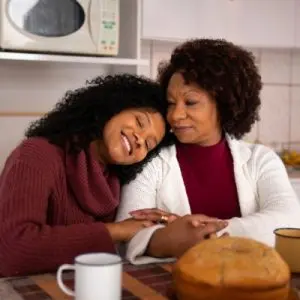 If there is an agent under a medical and financial power of attorney, a guardian or conservator, a duty exists to visit and ensure that nursing home care is appropriate and not negligent.
Sources of individuals to visit loved ones in nursing homes may include church volunteers, senior volunteer programs, and other grant-funded programs offered by the local area agency on aging.
Nursing Homes: What Happens When No One Is Watching?
If you have never been to a nursing home, a visit can be quite a surprise. It’s important to learn what you don’t know so that your loved one can receive the best care possible.
Unpleasant smells while walking down the hallways. Residents in hallways or sitting in wheelchairs ask you to help them because there is no staff nearby.
You may see elderly individuals sitting in wheelchairs, lined up in front of the nurses’ station. Many residents sleep in their wheelchairs in uncomfortable positions to accommodate staff who want to claim the residents are supervised.
Unsupervised time in a nursing home creates a significant risk of unexpected incidents and poor care.
For example:
- Witnesses or unwitnessed falls
- Residents sitting or in bed in soiled clothing
- Persons with dementia, Parkinson’s, or other cognitive diagnoses who are unable to feed themselves without support or reminders
- Skin tears, skin wounds, or pressure sores that can result in death
- Medication changes without family notification
- Family not being notified about changes in health conditions
Importance of Advocacy Expecially for Loved Ones With Dementia
When I was a care manager and a power of attorney, I, when possible, hired caregivers to be with my clients to ensure the nursing home was providing good care.
As you can imagine, a lot can happen in a single day, in a 20-hour period, where a rapid change in health condition may not be noticed by nursing home staff, and a loved one’s health quickly declines.
 This type of concern is less common in home care settings, where caregivers can be requested to call a family member to report unusual behavior or a change in condition.
Infections – urinary tract infections and pneumonia can quickly turn into sepsis, which is a life-threatening condition for older adults. Many instances of changes in condition go unnoticed, resulting in harm to residents.
While nursing home staff think they know better than a family caregiver who has years of interaction with the person in the nursing home, this is not always the case. A lack of two-way communication can lead to unfortunate and harmful outcomes.
Take Steps to Make the Best of Nursing Home Care
While there can be significant differences in the quality of home care versus nursing home care, a nursing home may be the only or best option.
If you are an older adult, make sure you have someone to advocate for you. Learn to advocate for yourself when health concerns arise.
Advocacy or having an advocate is necessary to support well-being and care, whether one lives at home or in a nursing home.
Looking for help caring for elderly parents? Schedule a 1:1 Consultation with Pamela D Wilson.
©2026 Pamela D. Wilson All Rights Reserved.