
How to Consider A Different Approach to Caregiving
The Caring Generation® – Episode 133 April 13, 2022. Taking a different approach to caregiving includes learning practical steps to manage caregiver relationships with elderly parents and spouses. Caregiving expert Pamela D Wilson shares tips to empower caregivers to balance life and caregiving responsibilities.
This is a multi-media article feature.
Scroll down to read the article, select links to listen to the podcast, or watch the video. The article has links in “pink type” to related topics about caregiving, health, well-being, and self-care.
Click the round yellow play button below to listen to this episode. To download the episode, click the button, which resembles a downward-pointing arrow. You can also use the scroll bar below the photo at the right to check out prior episodes.
Do you have a care or caregiving question? Share your question with Pamela by completing her caregiver survey. Learn more about how Pamela can help you with a virtual or telephone caregiver consultation by visiting Pamela’s elder care consulting page.
How to Look at Caregiving Differently
Have you considered taking a different approach to caregiving? If you are a family caregiver feeling any frustration, anger, resentment, or exhaustion, you’ll find five caregiver strategies that might help you consider taking a different approach to caregiving.
Caregiving strategies involve adjusting your response and approach to interactions with care recipients. If you are a professional caregiver, such as a CNA, working in a care community or the healthcare system, these tips will also be helpful to you.
These suggestions apply to any life situation, including family caregiving roles and work, where you may encounter challenging people and difficult life circumstances.
Here are five ideas to think about when taking care of family members and considering a different approach to caregiving:
- Reasons for not going along with what an aging parent or spouse wants
- How to show kindness and empathy even if you disagree
- Why winging it or not having a plan makes family caregiving situations harder
- Dealing with criticism
- Managing through the sacrifices that all caregivers make.
1 Reasons For Not Going Along With Aging Parent or Spouse Wishes
Let’s begin with the idea of not going along with what the person you care for wants. Purposely going against the wishes of a loved one may seem contradictory to having a positive caregiving relationship.
Reasons for not going along in this context relate to understanding the consequences of actions. Let me give you several examples of why you might want to disagree with a parent’s or spouse’s wishes—one from my personal life.
Avoidance
My mother was adamant about never going to a nursing home. She said she would come back from her grave and haunt all of us if we ever put her in a home.
You may hear similar statements about not wanting to go to a nursing home or care community from elderly parents, spouses, or other people that you know. I don’t hear many people say they want to go to a nursing home.
On the other hand, I don’t hear many people say that they love going to the gym or exercising every day. But they exercise because it’s good for them. When they’re finished exercising, they feel better mentally and physically.
Another example, who likes going to the dentist? No one. So, in the context of taking a different approach to caregiving and life, there are things we don’t want to do, but we do them because logically, we know these activities are good for us.
Using logic versus relying totally on emotion is a crucial consideration for making many decisions in life. Unfortunately, emotions often drive the decisions that family caregivers make. You see the effects of emotional decisions when caregiving responsibilities result in caregiver burnout, resentment, and exhaustion.
Logic Versus Emotion
Let’s return to the example of my mother not wanting to go to a nursing home as one reason not to go along with what a loved one wants. As a result of smoking a pack of cigarettes a day for many years, my mother was diagnosed with bladder cancer and needed surgery.
After surgery, the recommendation was to go to a nursing home, also called a rehab community, for physical and occupational therapy to regain her strength. Mom refused. My oldest brother was retired, so he agreed to come home for a month and help my dad care for my mother after the surgery.
Because my mother was adamant about not going to a nursing home, none of us, including my sister, a nurse, questioned my mother’s logic, digging in her heels. We didn’t ask why going to a nursing home was critical for her recovery. As a result, we failed to advocate for the care my mother needed.
In 1995, I didn’t have the experience I have today. If it were today, I would have made sure my mother understood the option of not having surgery versus the effort required to recover from surgery, so she could have made an educated decision—used logic versus being swayed by emotional fears about going to a nursing home.
Considering A Different Approach to Caregiving
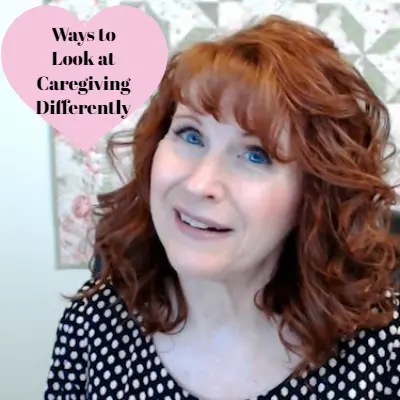
Click the red arrow in the picture below to watch the video.
Watch More Videos About Caregiving, Aging, and Health on Pamela’s YouTube Channel
Fear: A Negative or Positive Motivator
Fear can be a negative or a positive motivator. In this case, the decision to return home instead of going to the nursing home had unfortunate consequences. Mom refused to get out of bed and showed no interest in eating or drinking. Her refusal to participate in any physical and nutritional activity—that would have helped her recover—soon led to her death.
She was likely in pain from the surgery. Pain that could have been managed in a nursing home with medications and access to care from nurses and doctors.
The nursing home staff and my brother would have made sure Mom got out of bed every day to participate in physical therapy. Instead, her refusals and my brother’s lack of insistence resulted in an impossible situation that would have benefited from a different approach to caregiving.
In retrospect, we as a family should have met with the physician and the surgeon to ask many questions. For example, going to rehab would help my mother recover from the surgery, regain her physical strength, and return her to being able to manage day to day.
Instead, we allowed our fear of facing my mother’s anger to deter us from taking logical steps to evaluate the situation and fully understand the options. I don’t believe my mother had a complete understanding of the surgery or the effort it would take to recover from the surgery.
If she had a thorough knowledge of the options and consequences, Mom might not have felt obligated to have surgery. She may have chosen hospice care. My mother’s surgery for bladder cancer was on February 21, and she died on March 8.
Unexpected Consequences of Refusals
Taking a different approach to caregiving means not allowing an aging parent’s or spouse’s refusal to result in unexpected consequences. Other examples are persons with Alzheimer’s who are adamant about driving a car when they have had multiple car accidents or have become lost.
Refusal to use a walker or cane when falls are a frequent occurrence. Taking a different approach to caregiving in this context means not allowing your fear as a caregiver to stop you from investigating situations and consequences and having discussions with loved ones so they have a thorough understanding and can make a logical decision.
Sometimes a parent’s rational decisions may seem illogical to you. But at a minimum, you can discuss the potential consequences and discuss a what-if plan.
For example. Mom or Dad, based on our conversation, I understand that you are not concerned about the balance issues and physical weakness that the doctor has diagnosed. So it sounds like you don’t want to follow medical recommendations to use the walker.
This is your choice. But you might want to plan what happens If you fall and injure yourself or break a hip. How will you recover, where will you live if you can’t return home, how will you pay for care, and who will be your caregiver? Your parents may not be ready for this type of discussion, but you have stated your concerns.
2 Show Kindness in Disagreements
 This discussion leads to number two for taking a different approach to caregiving: showing kindness even if you disagree. We need more compassion and respect when engaging in conversations, even if we disagree with others.
Taking a different approach to caregiving means that elderly parents, spouses, or others who need care will not always agree with their caregivers. If you are a family caregiver, you probably know there can be more points of disagreement than agreement.
Now I’m not saying that different opinions are not a good thing—they are—when you factually and thoroughly investigate and examine both sides to be sure you can make logical decisions.
Let’s take a step back to look at logic. What is logic, and how does it work? A simple example is using math, three plus three equals six. Completing this equation will never equal another number.
The use of logic helps people question everything. Using logic can influence the way we act and the decisions we make. Using logic helps with problem-solving, planning, and consequential thinking.
How Emotions or Cognitive Diagnoses Affect Logical Reasoning
If you are interested in learning how emotions affect logical reasoning, read the article How Emotions Affect Logical Reasoning by Dr. Nadine Junk and others. The article relates emotions and logic to taking an exam or test, which most of us have taken in school.
The research indicates that individuals in a negative mood who are influenced by their feelings perform worse than those in a positive mood. Interestingly, people in a neutral mood—less swayed by emotion—outperformed people in positive or negative moods.
Additionally, making correct decisions and choosing the right time can be more challenging when emotions run high, as emotional processing and reasoning require working memory and attentional focus. When stress and emotions take over, it can be challenging for the brain to focus on a single subject.
So when you relate decision-making to caregiving, you have situations where long-distance caregivers may be involved, and a parent may be chronically ill. There are worrisome discussions about nursing homes, assisted living, memory care, in-home caregivers, hospitalizations, medical appointments, healthcare treatments, insurance, and other related issues.
Discussing these ideas in an emotional manner can make it more challenging to make informed decisions. Initiating caregiving discussions when there are no immediate crises or pressure to make a decision can increase the likelihood of making objective, fact-based decisions rather than emotionally motivated ones.
The one factor that can affect the ability of care receivers to make decisions is memory loss or any cognitive difficulties that can be associated with other chronic diseases like Parkinson’s or MS. In these cases, as the caregiver, if you are the legally responsible individual, such as an agent under medical or financial power of attorney, you may need to evaluate and make decisions on behalf of a parent or spouse.
A Different Approach to Caregiving
Decision-making that balances logic and emotions can help family caregivers adopt a more effective approach to caregiving. Acting in this manner raises a few additional considerations. For example, not to take things personally.
You will be a more effective caregiver if you learn to be calm and objective. A safe place to vent can be found in an online support group or an in-person group with other caregivers who have had similar experiences.
Using the skills we discussed for taking a different approach to caregiving includes asking questions about anything you are unsure about and rephrasing what you hear an aging parent, spouse, or another person say to make sure you understand and eliminate assumptions. In addition, encourage all of the people you interact with to talk while you listen to get to the bottom of concerns.
3 Collaboration in Problem-Solving
 The third idea for taking a different approach to caregiving is the idea of collaboration in problem-solving. So, instead of winging it alone by responding to one crisis after another, you have solutions and options on hand in advance of experiencing difficulties.
Collaborating to solve problems with good intentions can help avoid adversarial relationships and minimize judgment or criticism in situations where people may hold divided opinions. Many people use collaboration and problem-solving skills in the workplace.
Why not cultivate these skills in our personal and caregiving lives with family members, friends, and those involved in caring for elderly parents and spouses? Here’s the gap. Caregivers are busy people with a lot to do and rarely anyone to help.
There are times when caregivers become overbearing or demanding due to time constraints. For example, when family members who could help don’t, the primary caregiver can become more emotionally distraught.
What Happens When Emotions Take Over?
When emotions take over, making decisions may create more problems. Taking a different approach to caregiving means never thinking that you have to do it all or that not involving others is a good plan.
Your parents may want you to do it all, but you will learn, if you haven’t already, that this may work out for a short time but not indefinitely. Especially when that six months of helping out Mom or Dad project turns into a 5-, 10-, 15-, or 20-year project.
Knowing your limits as a caregiver and setting boundaries is essential for effective collaboration, problem-solving, and creating a personalized care plan for loved ones. Collaborating to solve problems means that you are not able or responsible for solving all problems by yourself.
Involving the care receiver, other family members, healthcare providers, and others is a better way to create a plan for caring for aging parents. The sooner you realize this, the less alone you will feel.
To simplify the process of collaboration and problem-solving, it’s best to write out the big-picture concerns and then decide which issues are a priority to tackle from a health or timing perspective. If you have a team of family members who can help, you may be able to accomplish more in a shorter time frame. Do your best to remain optimistic about resolving the concerns, and above all, be persistent. Don’t give up.
Criticism and Judgment
Taking a different approach to caregiving also involves dealing with criticism or judgment from the person you care for, family members, friends, or other individuals who may not understand the stresses and responsibilities of being a caregiver. As a family caregiver, it can be difficult not to take criticism or judgment personally when you know the time commitment and effort you put into helping a loved one.
But when you think of it, knowing what you do is precisely why you should not take criticism personally. So what are some ways to respond when caregivers feel criticized or judged?
Good responses in the spirit of kindness and compassion to anyone who criticizes might be like,
- Thank you for the suggestions. I appreciate them. I’m doing all I can right now. When are you available to help?
- That sounds interesting. Tell me more about how the idea you are sharing worked when you were a caregiver and when you are available to help.
It’s easy for people watching on the sidelines without any experience of the day-to-day activities of family caregivers to make suggestions that have zero application. Another idea you may have heard me make before is to create a list of all of the things you do and the time commitment you make every week. You can hand the list to anyone who criticizes and ask what responsibilities they would like to take over.
What is the Root Problem?
In these situations, the primary issue is usually time. If you focus on the fact that you are doing everything, others are not helping, or all you receive is criticism, you will continue to be frustrated, angry, and resentful.
What do you want? You want your life before caregiving back, or maybe just a little more time.
How do you get there? Collaborating with others, even if this means scheduling an eldercare consultation with me or someone you trust to assist.
Collaborating means identifying community services and other ways for parents and spouses to receive the care they need if no one in your family can assist. While taking these steps can involve more time and effort, if you don’t move ahead, you will never be free of the frustrations you are experiencing.
Collaborating and problem-solving also means discussing the changes you want to make with a parent who may not want their life tossed upside down or their routine changed. For more information on talking to parents about care and answers to hundreds of questions posed by caregivers, listen to all of The Caring Generation podcasts.
Sacrifices Made by Family Caregivers
 Family caregivers make sacrifices. To take a different approach to caregiving, let’s look at sacrifices as trade-offs and choices. Caregivers say they didn’t have a choice but become family caregivers.
Everything we do in life is a choice. A or B, C or D. We make choices to get things we want.
We work to pay rent or a mortgage or to support our family. We don’t take care of our health, so we become sick or diagnosed with one or more chronic diseases. Everything in life is cause and effect. Another example is that you don’t brush your teeth, so you have five cavities.
We all make choices that result in where our lives stand today. The choices can feel like sacrifices when we are giving up one thing that we enjoy in favor of another. Relating this to becoming a caregiver, for how long are you willing to give up things in your life in favor of being a caregiver?
What Are You Willing to Do?
Taking a different approach to caregiving means asking a lot of questions to identify the most prominent concerns and what you are willing to do. For example,
- How much longer are you willing to make this sacrifice, trade-off, or choice if you are already a caregiver?
- What are you ready to do to change the situation so that it doesn’t feel like so much of a sacrifice and there is more balance in your life.
While you might feel stuck with a problem, you are only as stuck as you believe. The mind is a powerful machine. Every input has an output.
When you visualize what life could be like and commit time to investigate alternatives, you might be inspired and motivated to change. Ask these questions.
- How are you programming your mind?
- Are you willing to reprogram your thoughts to take a different approach to caregiving that feels better for you if you are experiencing anger, resentment, burnout, and exhaustion?
- Are you willing to collaborate with others to change your situation?
- Are you ready to not go along with your current situation that may have you swimming in emotions instead of looking objectively and factually at the options that you may not be able to see if you dwell only on the negatives?
Is it time to take a different approach to caregiving? Only you can answer that question.
Looking For Help With Your Caregiving Situation? Learn More About Scheduling an Elder Care Consultation With Pamela D Wilson
©2022 Pamela D. Wilson All Rights Reserved