
How to Recognize Self-Destructive Caregiving Behaviors
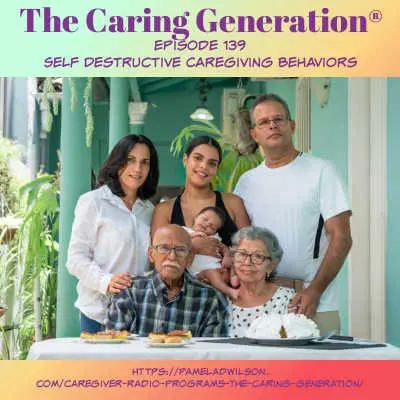
The Caring Generation® – Episode 139 May 25, 2022. How to Recognize Self-Destructive Caregiving Behaviors. Caregiving expert, Pamela D Wilson shares habits that negatively affect family caregivers and how to change behavior patterns to replace self-defeating behaviors. Learn how to improve family caregiving relationships through the process of establishing trust and validating emotions.
This is a multi-media article feature.
Scroll down to read the article, select links to listen to the podcast, or watch the video. The article has links in “pink type” to related topics about caregiving, health, well-being, and self-care.
Click the round yellow play button below to listen to this episode. If you want to download the episode, click the button, which looks like a down arrow. You can also use the scroll bar below the photo at the right to check out prior episodes.
Do you have a care or caregiving question? You can share your question with Pamela by completing the caregiver survey on her Contact Me page. You can also schedule and learn more about a virtual 1:1 consultation with Pamela.
Family caregiver stress can lead to self-destructive caregiving behaviors. Caregivers experience emotional and physical distress from the ongoing pressures of caring for aging parents or a spouse. Aging parents or spouses who become dependent on the care of adult children or a healthy spouse can become self-centered and unable to see the effects of needing care on others.
Persons not yet in a caregiving role who eventually become caregivers are shocked by how the caregiving role strips caregivers of life as they knew it. This lack of empathy and understanding for the day-to-day experiences of family caregivers can lead to relationship stress that leads to self-destructive caregiving behaviors.
Caregiving Responsibilities Pose Adverse Effects on Life
Many caregivers acknowledge the choices they made and the detrimental effect on their lives. Those who participate in caregiver support groups are honest about losing career opportunities, making less money, damaged marriages, poor health, and the effects on children who take a back seat when caring for elderly parents.
It’s no surprise that trading parts of life for caregiving duties can lead to self-destructive caregiving behaviors that extend across many aspects of life, including career, family, and the ability to earn a living. Even with all of the negatives, being a caregiver is viewed by many as fulfilling and the right thing to do.
Self-destructive behavior patterns result from unproductive ways to deal with stress and avoid painful thoughts, emotions, or relationships. Being a caregiver for elderly parents pulls adult children back into family relationships. If marital relationships were not on solid ground before caregiving, stress related to caring for a sick spouse can lead to relationship breakdowns.
Unexpected Situations May Result in Unreasonable Expectations
One day or night—out of the blue—comes the phone call from aging parents who need help. Children who feel a responsibility or duty are catapulted back into family relationships involving a high degree of care for aging parents.
Elderly parents expect their children to be immediately available to meet their needs—even though the family never discussed previously caregiving expectations. Expectations by aging parents for care and support can be complicated by parents’ self-destructive habits or care refusals.
How Do Self-Destructive Caregiving Behaviors Show Up?
What are self-destructive caregiving behaviors? How can you recognize them when they happen? Even better, how can caregivers replace self-harming behaviors with positive habits that contribute to well-being?
Anyone interested in behavior change can learn the steps to a more positive life. If you are a family caregiver, you may notice that elderly parents fall into the trap of self-destructive behaviors.
For parents who need care, self-destructive caregiving behaviors include care refusals like not taking medications, seeing the doctor, eating healthily, or becoming more physically active. Caregivers ignore the same self-care recommendations for better health.
Self-harming behaviors originate from difficulty dealing with ongoing stress, avoiding painful thoughts or emotions, or navigating challenging relationships. These issues can stem from the present time or date back to childhood years.
Challenging relationships with aging parents may have a foundation in relationships with their parents. If parents are physically or verbally abusive or abuse alcohol or drugs, children’s likelihood of self-destructive behaviors increases. Consider these factors as you model behaviors for your children.
How to Recognize Self-Destructive Caregiving Behaviors
Click the red arrow in the picture below to watch the video.
Watch More Videos About Caregiving and Aging on Pamela’s YouTube Channel
Family relationships of the past can impact caregiving interactions today. Introspection can identify self-defeating actions that have an emotional component.
Examining Family Relationships Can Bring About Positive Habit Change
Let’s begin with behaviors of overcontrolling caregivers who take over the lives of aging parents or a spouse. Caregivers spend their lives doing for others, often unaware that being too helpful can control or prevent loved ones from doing things for themselves.
Doing so can exert control over others, which can harm both the caregiver and the care recipient. Let me share a caregiver example of being too helpful that relates to caregiver control.
A Caregiver’s Story
A husband was the caregiver for his wife, diagnosed with dementia. As the memory loss diagnosis progressed, she came to depend on her husband for many aspects of daily support.
As many caregivers do, the husband became seriously ill and was hospitalized. So the children placed their mother in memory care assisted living since she was not safe living at home alone.
The first couple of weeks in memory care were emotionally challenging for the family. However, then, suddenly, Mom returned to many of her prior habits. The children were pleasantly surprised.
Mom asked for the newspaper to read it every day, like she used to do. She began calling friends on the phone when she hadn’t used one in years.
Separated from her husband, the wife returned to doing more things for herself. Her husband took over these activities when they lived together because he wanted to be helpful or desired to control their day-to-day routine, or maybe he had another reason.
As you can see, doing for others can have unintended consequences. A spouse or an aging parent can become more dependent on the caregiver. Caregivers who do too much can take away the abilities of elderly parents, spouses, grandparents, and others to perform tasks independently.
Caregivers Have Good Intentions, But . . .
Here is another example—a caregiving wife strongly encourages her husband to be active. On the surface, encouragement might seem very positive.
However, let’s look at the husband’s health concerns. He has type 1 diabetes that has resulted in neuropathy in his feet. This feeling of numbness makes it painful for him to walk long distances.
And because long walks are unbearable, his balance is not steady. As a result, he could fall and experience a severe fracture. So we have a husband who was previously very physically active and has become less active because of numbness and pain in his feet when walking.
The good news is that the husband wants to swim at the recreation center. He believes this exercise would be beneficial for him as an alternative to walking. His concern is that the distance from the parking lot to the locker room and then to the swimming pool is too far for him to walk comfortably.
What might be the solutions? The husband wants to purchase a scooter so he can get around from place to place without experiencing pain or risking a fall. His wife doesn’t want him to get a scooter because she thinks he will stop walking.
What’s Really Underneath Caregiving Behaviors?
In this scenario, what is the downside of using a scooter if the goal is to exercise to be physically stronger and feel more independent? Here are a few questions to consider
- What does the caregiving spouse fear?
- Will the husband spend more time swimming and less time with his wife?
- Might the wife be embarrassed when people see her husband using a scooter?
- Will the wife feel a loss of control if her husband enjoys newfound independence?
In many cases, it can take a little investigation to determine the underlying causes of cause self-destructive behaviors that can harm another person or the caregiver.
Let’s take a look at the bigger picture and consider the benefits of owning a scooter.
- For this man, weight-bearing activities like walking are painful and risky due to neuropathy in his feet—so riding a scooter makes practical sense.
- Swimming is an excellent cardiovascular and muscle-strengthening activity that is non-weight-bearing.
- In addition to swimming being physically beneficial, participating in enjoyable activities also yields positive mental health benefits.
- Making new friends at the rec center swimming pool might bring new opportunities for socialization, which is positive for health and well-being.
Detrimental Caregiving Behaviors
Caregiving relationships that prevent participation in positive activities are damaging. Depending on the nature of the relationship, jealousy or resentment may arise.
For example, a sick parent may feel left behind if the caregiver daughter goes to work or spends time with friends. On the other hand, the caregiver may resent a demanding parent, so they may turn to alcohol, drugs, or other self-destructive caregiving behaviors to ignore how they feel about the situation.
Many family caregivers are stuck in unpleasant situations because they don’t know how to flip the switch and look at the situation differently. Let’s talk specifically about unnecessary self-sacrifice or “martyrdom” as a self-destructive caregiving behavior.
Some caregivers give up excessive amounts of their lives. They place careers or jobs on the back burner and delay getting married or having children when they move into the home of an elderly parent to provide 24/7 care.
Avoidance and Denial
Why? There can be a variety of motivators. For example, something the caregiver wants to avoid.
It’s easier to focus and devote one’s life to caring for another person, so the caregiver can avoid dealing with issues or conflicts in their life. Then there are situations where adult children become trapped caring for elderly parents who are filled with blame, criticize every move, and don’t want the caregiver to have friends or get a job because parents would not have the caregiver’s full attention.
Elderly parents can deny how much care they need or how quickly their health is worsening. Facing unpleasant situations leads to self-destructive caregiving behaviors when one refuses to discuss the issue or plan for the future. These situations leave the caregiver’s life in limbo because they are unable to make plans for their future.
Then there are parents or unhelpful family members who are moody or create unnecessary drama. Do your siblings refuse to help care for aging parents? If so, there’s probably a relationship problem dating back to childhood you don’t know about.
Self-Neglect
Other self-destructive caregiving behaviors include a lack of self-care or self-neglect. Self-neglect means that caregivers or care receivers don’t take care of their health or participate in activities that boost their self-esteem or minds.
For example, most caregivers take elderly parents to the doctor for check-ups, but don’t take the time to see the doctor themselves. Caregivers want parents to eat a nutritious diet and exercise regularly.
Still, caregivers often fail to follow their advice. Self-destructive caregiving behaviors happen when caregivers place the well-being of others above their own health and well-being. This type of unbalanced relationship leaves little or no time for the caregiver.
It is easy to fall into the habit of participating in self-destructive caregiving behaviors without noticing the negative effects on life until caregivers pass the breaking point. If you feel emotional about your caregiving situation—feeling resentment, anger, or guilt, it’s time to be introspective about what is happening.
Make the Shift To Positive Behaviors
 Feeling isolated or depressed are more self-destructive caregiving behaviors. This state of mental distress is why managing thoughts becomes essential.
Thoughts result in daily reality. When thinking changes, feelings and behaviors will follow.
But it can be challenging to change a mindset if you are not clear about what makes you feel depressed, frustrated, anxious, or a list of other feelings. Understanding other self-destructive caregiving behaviors like eating junk food, smoking, drinking, doing drugs, gambling, cutting, or other self-harming activities is the first step to changing a behavior pattern.
So, where to begin? Start a journal or a notebook. Begin noticing your feelings—happy or sad.
At the moment, you have the feeling, write down what is happening to make you feel this way.
Keeping a thought diary can help you understand your feelings, as the reasons you feel a particular way may not be immediately evident.
It may take some time to relate today’s experience to an experience you had one year ago or ten years ago, or to notice patterns of behaviors. That’s okay.
Making an effort to figure all of this out is progress toward change. And change can be uncomfortable when life feels like it’s totally out of control.
Be Honest About Self-Destructive Caregiving Behaviors
Let’s review a list of other self-destructive caregiving behaviors before moving on to steps you can take to work through this state of discomfort. Here’s a laundry list:
- Believing you will fail
- Failing to take action
- Procrastinating
- Self-pity
- Being mean to other people
- Complaining
- Blaming others
- Dwelling on the negative
- Criticizing others
Identifying participation in these behaviors can require alone time to be honest about your contribution to where you are today. Being honest is an opportunity to build life skills, improve caregiving relationships, rise above daily challenges and improve relationships.
Tips to Move Forward
It is helpful, especially in caregiving relationships, if everyone involved can be honest about their feelings. Being honest requires a willingness to avoid blame and take full accountability for one’s current situation.
Acknowledging the common or different goals of caregiving relationships is vital to making progress in overcoming self-destructive caregiving behaviors. For example, aging parents and their children who become their caregivers are in very different life stages.
Adult children may be building careers or having children while elderly parents are retired. Taking these differences into consideration is important so that each person in the care relationship feels heard and valued.
While parents may have care needs and prefer that their children become their caregivers, this is not always possible or practical. Discussing the practical aspects of care can be challenging. However, by addressing uncomfortable life situations, it is possible to identify alternative options for caring for aging parents.
Dealing head-on with uncomfortable topics can lead to positive change rather than remaining stuck in destructive caregiving patterns. This forward movement may help repair broken relationships between parents who need care and their adult children.
Let’s examine seven steps for identifying feelings that can result in self-destructive caregiving behaviors.
1 Time for Self-Reflection
Instead of self-isolating to escape uncomfortable or difficult family situations, make time to be alone and reflect on your thoughts and emotions. Get up early and find a quiet space where you can think, journal, or spend some quiet time before going to bed.
Sometimes, doing routine activities like housecleaning, laundry, or yard work is a great time for self-reflection. Figure out an activity that works for you and gives you time to think.
2 Make a List of Behaviors You Want to Leave Behind
Create a list of self-destructive caregiving behaviors that you observe. Prioritize actions that make you feel the most uncomfortable or unhealthy.
Let’s use an example of being constantly criticized by an aging parent or a spouse. This excludes parents with memory loss or mental health diagnoses because these would be separate discussions with very different recommendations.
People with memory loss often struggle to recall conversations or adjust their behavior. Individuals diagnosed with mental illness may also have little control over their actions or responses.
The way the interaction of being criticized makes you feel and how you respond may be a behavior you want to leave behind.
If you are a caregiver who is constantly exposed to criticism, how do you respond?
- Do you walk away and isolate yourself to get away from a critical care receiver?
- Do you turn to alcohol or drugs to numb your feelings of anger or resentment?
- How do you feel when you are criticized?
- Do you feel like you are not a good person?
- Maybe you feel like your mom or dad will never be happy?
- You might feel like a failure because you can’t seem to get it right or something else.
Begin writing down each circumstance where you have a negative emotional response and what is happening at the time. You may be able to recognize a pattern that you can interrupt with a replacement behavior.
3 Gain an Understanding of the Situation
When an event triggers strong emotions, how would you like to respond? Would you like to be able to express your feelings and ask the other person why they feel the need to criticize or behave in a certain way?
Considering ways to initiate a two-way conversation can lead to a deeper understanding. While elderly parents can be critical because they feel out of control over a situation and are dependent on others for care, these feelings do not mean it’s okay to be mean or abusive to a caregiver.
Being in constant pain can make a person irritable or short-tempered. There could be many reasons that are not obvious for a parent’s behavior.
Avoiding discussions about hurtful interchanges is a self-destructive caregiving behavior. Through the caregiver’s action of remaining silent and holding in feelings, an aging parent or a spouse is permitted to misbehave.
Think of when you were a child. Did your parents let you do whatever you wanted, or did they intervene? When you become the caregiver for an aging parent, roles can reverse.
Examine what isn’t working in your caregiving relationship and identify effective ways to respond. For example, avoid damaging your health by eating a bag of Oreos or drinking a bottle of wine whenever you become upset. Notice when something happens that makes you crave junk food and stop yourself by replacing the desire for cookies with a different and more positive behavior.
4 Be Compassionate With Yourself
Find ways to be compassionate with yourself and participate in self-care. So rather than eating the bag of Oreos, leave the house to go for a walk, take a short drive, or go read a book. Think of distractions that will take you away from harmful behavior patterns.
Rather than drinking a bottle of wine, call a friend. Refuse to allow the behaviors of another person to drive you to self-harming behaviors. Don’t give up your power or your self-worth to anyone.
5 Plan Conversations
 So, in the case of having a conversation with a criticizing care receiver, think about what you want to say. Role-play the conversation with yourself, a family member, or your best friend.
The goal is to be firm but compassionate. Avoid criticism or blame.
Explain how you feel when verbally attacked. Ask why the other person feels it necessary to criticize.
Listen to the feedback and determine if the statements are valid. It can be easy to do something routinely that irritates another person, making criticism one of their responses.
Think of finding the toilet seat up or dishes left in the sink instead of being put in the dishwasher. These are simple things, but they are the things that, when piled one on top of another, become annoying if one does not speak up.
6 Identify Your Emotions
When navigating challenging caregiving relationships that leave you feeling unappreciated, frustrated, angry, or any other negative emotion, it is essential to acknowledge both your own emotions and those of the care recipient.
Are you both feeling frustrated, angry, or worried? Discussing feelings, also called emotional validation, is a way to learn about, understand, and express acceptance of another person’s emotional state or feelings.
Validation does not mean that you feel the same way, but that you understand how another person might feel differently, just as you might feel a certain way under different circumstances.
For example, snakes frighten you while your friend is fascinated by snakes. Thoughts about snakes are a simple example of two people understanding how another feels, but having different opinions.
7 Accept Your Feelings
Think of a time when you had someone disagree with your feelings, and you felt defensive. An example would be a family member who is not a caregiver telling you that “you shouldn’t feel this way” or “caregiving can’t be that hard.”
When caregivers work until they are exhausted, it’s easy to lose patience and trust. When these types of relational exchanges happen, you may not want to talk to the other person or spend time with them, right? Caregivers often become frustrated when an aging parent doesn’t understand them or what they are going through.
The Steps Through Emotional Validation?
What are the other steps included in emotional validation?
1 Listen Attentively
The first step through emotional validation is active listening. When you listen in this manner, you are fully present and trying to understand another person in a non-critical and non-telling-them-what-to-do manner.
Listen and ask questions. Do not offer solutions. The moment you start telling someone else what to do, you end the process of emotional validation.
2 Accept The Feelings of Others
Regardless of whether you agree with how another person feels, accept their feelings. This is not a matter of right or wrong.
This discussion aims to establish a pattern for fostering honest and safe conversations where you can discuss any topic.
3 Gain Agreement About What You Hear
Another critical step is to restate how you think the person feels so that you are not making any incorrect assumptions. Then the next step, if you are the caregiver, is to gain the care receiver’s agreement to work through this process with you so that they understand your feelings.
Why It’s Important to Discuss Caregiving Emotions
In most caregiving relationships, feelings are not regularly discussed. Caregivers may not want to burden an aging parent with their emotions or worries. So they remain silent and engage in self-destructive caregiving behaviors.
On the other hand, the aging parent or the spouse may not want to be a burden, but instead, they react with verbal insults or other unkind reactions. Neither the parents nor the caregivers are talking about their feelings because they don’t think their concerns will be heard, or perhaps there is a lack of trust.
This takes us back to the beginning of self-destructive caregiving behaviors. If you feel emotionally distraught and unable to resolve a conflict, you may not trust the person with whom you have the conflict.
This could be a person you care for, such as aging parents, siblings, or another individual. Unfortunately, a lack of trust and a relationship on shaky ground can lead to complications in caregiving and other areas of life.
The path forward is to identify why you feel the way you feel or respond the way you do. Take a moment to reflect on this and consider how you can respond differently, which will ultimately alter the outcome of future interactions.
And through this, agree to participate in the emotional validation process to work on the relationship. Doing this may not be easy if you are uncomfortable sharing your honest thoughts and feelings.
If the conversations don’t work out as you hope, you could end up in the same situation. But at least you attempted. Then you can decide whether to remain in the position or the relationship, or not.
Worst case, you now have another tool, emotional validation, to work through other challenging situations in your life. When you choose to end self-destructive caregiving behaviors, you take back ownership of your life.
Looking For Help With Your Caregiving Situation? Listen to Over 100 Podcasts Answering Questions from Family Caregivers on The Caring Generation.
©2022 Pamela D. Wilson All Rights Reserved.